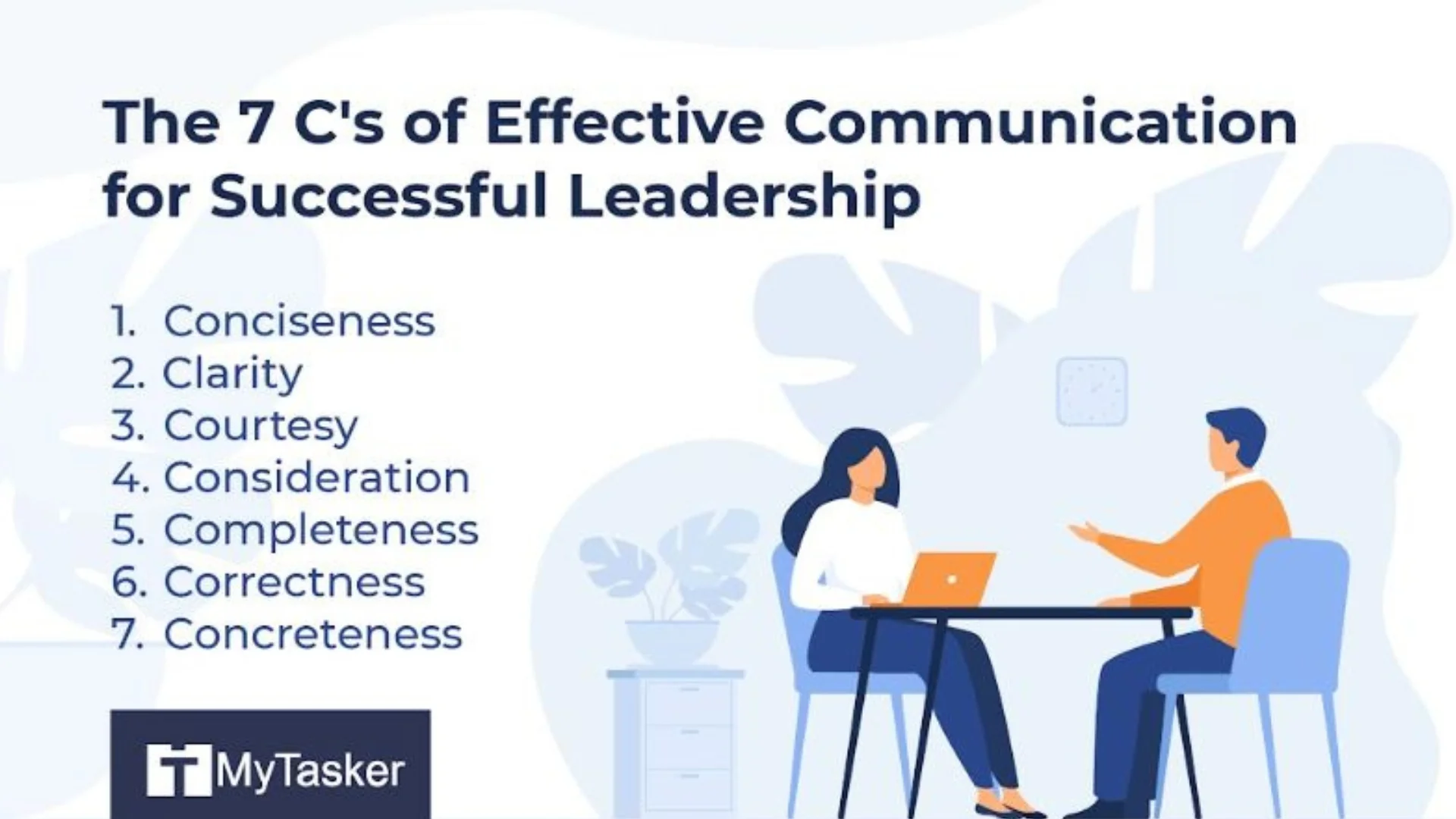
The 7 Cs of Communication are Clarity, Conciseness, Concreteness, Correctness, Consideration, Completeness, and Courtesy. These principles help make messages clear, professional, and easy to understand. When you follow them, you reduce misunderstandings, build stronger relationships, and communicate your message effectively — whether in person, on calls, through emails, instant messages, reports, meetings, webinars, presentations, or while pitching ideas to clients or speaking to an audience.
Most advice on the 7 Cs assumes the other person is in the room. Increasingly, they aren't. When your message travels to a teammate, a contractor, or an assistant working eight hours ahead of you, it has to survive without your tone of voice, without the whiteboard behind you, and without the follow-up question they can't ask until tomorrow morning. A sentence you'd never have to explain in a hallway becomes half a day of back-and-forth in an inbox. That is why the 7 Cs matter more in delegated and remote work than anywhere else: the brief is the context.
Sometimes an additional principle — Coherence (logical flow) or Cohesion (connected ideas) — is included, to ensure the message flows smoothly rather than jumping between unrelated points.
The 7 Cs help you show a clear picture, cut out the waffle, and present interesting facts. Conciseness in particular means getting straight to the point and avoiding unnecessary words, which is what keeps an audience engaged instead of losing interest halfway through.
Used together, they make sure everyone understands what you want to say.
What are the 7 Cs of communication?
1. Conciseness
Helps in: emails, executive summaries, meeting agendas, support replies, and team chat updates.
- Saves time for the reader or listener
- Reduces unnecessary information
- Improves focus on the main idea
- Makes communication quicker and more efficient
- Increases the chances the message will be read fully
2. Clarity
Helps in: team instructions, training documents, project goals, SOPs, and meeting presentations.
- Prevents confusion and misunderstandings
- Helps the audience grasp the message quickly
- Improves overall communication effectiveness
- Makes instructions easier to follow
- Builds confidence in the communicator
3. Courtesy
Helps in: customer complaints, professional emails, colleague feedback, conflict handling, and client communication.
- Builds trust and goodwill
- Strengthens professional relationships
- Creates a positive communication environment
- Reduces conflict and tension
- Encourages cooperation and openness
4. Consideration
Helps in: marketing messages, client proposals, sales presentations, user instructions, and stakeholder communication.
- Makes the message more relevant to the audience
- Improves engagement and interest
- Shows empathy and respect
- Helps address audience concerns effectively
- Increases the impact of the message
5. Completeness
Helps in: project briefs, meeting invites, management reports, project updates, and task instructions.
- Helps the audience make informed decisions
- Reduces the need for follow-up questions
- Improves clarity of instructions or requests
- Ensures nothing important is left out
- Builds trust through transparency
6. Correctness
Helps in: business emails, official reports, website content, client proposals, and training materials.
- Enhances credibility and professionalism
- Prevents misinformation
- Improves the quality of communication
- Builds trust with the audience
- Reflects attention to detail
7. Concreteness
Helps in: data reports, case studies, sales pitches with numbers, feedback with examples, and project result explanations.
- Makes the message more convincing
- Improves understanding with clear details
- Reduces ambiguity and vague statements
- Supports arguments with evidence
- Makes communication more memorable
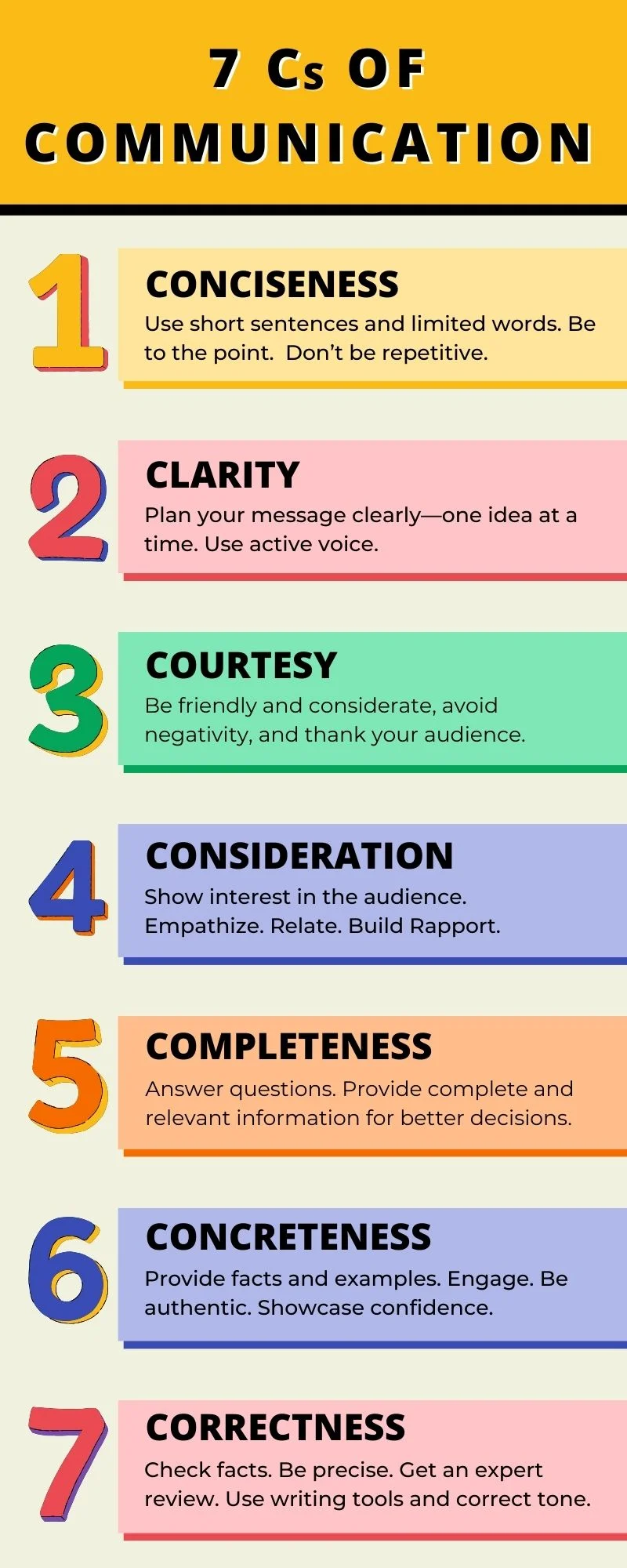
Understanding Effective Communication
Good communication skills are vital when it comes to working with colleagues or talking to potential clients. It helps us solve problems, work through differences, build strong relationships, and support each other. When people communicate well, businesses run better.
Benefits of the 7 Cs of communication, with statistics
- Productivity: Companies that communicate well are 25% more productive.
- Employee engagement: When everyone is clear with each other, companies make 21% more money, and 41% fewer people call in sick.
- Error reduction: Misunderstandings cost businesses between $420,000 and $500,000 annually. For larger enterprises, these costs may escalate to $62.4 million annually.
- Satisfaction: 68% of customers say they are willing to pay more for a better customer service experience, and communication is a large part of that.
- Customer retention: Effective communication in customer service boosts retention by up to 94%.
Communicate well, and everyone works better, customers stay longer, and businesses grow faster.
The 7 Cs and the delegation gap
Delegation fails in predictable places, and each failure maps to a missing C. When you hand work to someone who isn't sitting next to you, your brief is the only context they have. Here is what a broken brief actually costs:
| The C | What goes wrong when it's missing from a delegated task |
|---|---|
| Clarity | The assistant infers the goal and delivers the wrong output — correctly executed, wrong target |
| Conciseness | The one instruction that mattered is buried in paragraph four and never surfaces |
| Concreteness | "Make it look more professional" turns into three revision rounds and a lost afternoon |
| Correctness | Wrong file version, misspelled client name, deadline given without a time zone |
| Completeness | The task stalls at hour one, waiting for the login you forgot to attach |
| Consideration | The brief assumes access, tools, or context the assistant doesn't have on their side |
| Courtesy | Feedback lands as criticism, and the assistant quietly stops asking clarifying questions |
That last one deserves attention. Discourteous feedback doesn't slow one task down — it slows every future task down, because the person stops flagging uncertainty and starts guessing. It is the most expensive failure on this list precisely because it never announces itself.
The 7 Cs of effective communication, with examples
Figuring out how to communicate effectively comes easily to some people and not to others. Here is each principle with a working example.
1. Conciseness in communication
Conciseness means getting to the point in short sentences. It keeps your audience engaged and respects their time. When you deliver your message in a nutshell — especially in outreach emails — you show that you value brevity.
How to be concise:
- Use action verbs. Choose strong verbs that carry the meaning on their own.
- Cut the fluff. Remove words that add length but not information.
- Highlight core points. Make the main idea impossible to miss.
- Don't repeat yourself. Every word should earn its place.
Good example: "We must reduce costs by 10% this quarter by improving efficiency and automating routine tasks."
Why it works: It is direct, naming both the goal (cost reduction) and the method (efficiency and automation).
Bad example: "We should think about reducing costs, maybe by improving effectiveness, or perhaps we could make things more self-operating, but without overlooking other areas."
Why it fails: It is long, hedged, and gives the team no idea what the actual priority is.
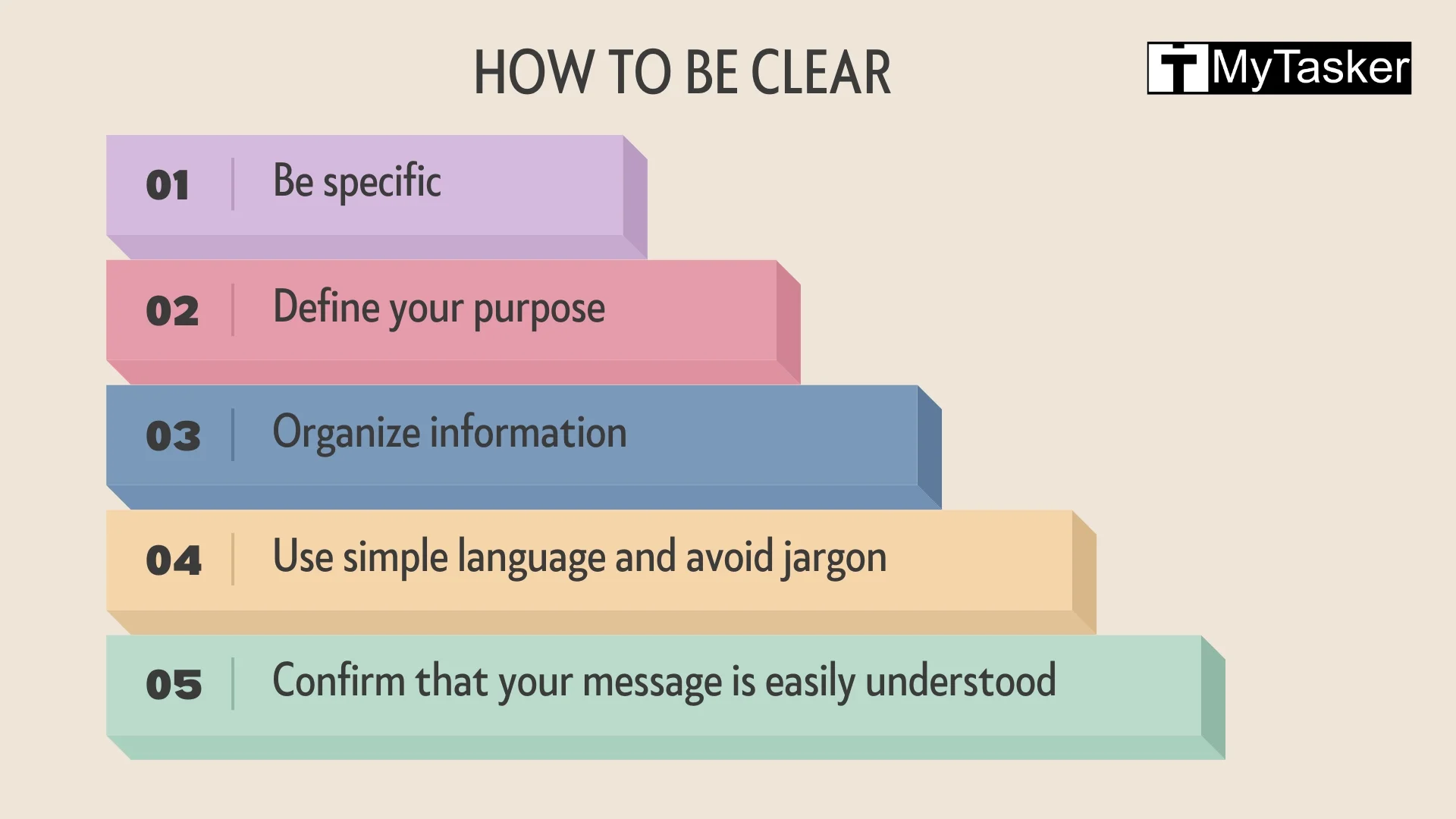
2. Clarity in communication
Clarity is the foundation. Avoiding jargon and using plain language ensures your audience gets the message without the fog. Clear communication drives action — whether that's to subscribe, download, or engage with your content.
How to be clear:
- One idea at a time. Address a single concept per sentence or paragraph.
- Define short forms upfront. Explain acronyms and technical terms the first time they appear.
- Use active voice. Make your sentences direct.
- Stay on point. Keep anecdotes and detail relevant to the message.
Good example: "Our primary aim is to increase client satisfaction by 20% next quarter through faster response times and more personalised service."
Why it works: It is direct and brief, naming both the objective (20% improvement) and the method (quicker responses, customised service).
Bad example: "We need to improve customer satisfaction very soon."
Why it fails: There is no target, no method, and no timeframe, so every person reads it differently.
3. Courtesy in communication
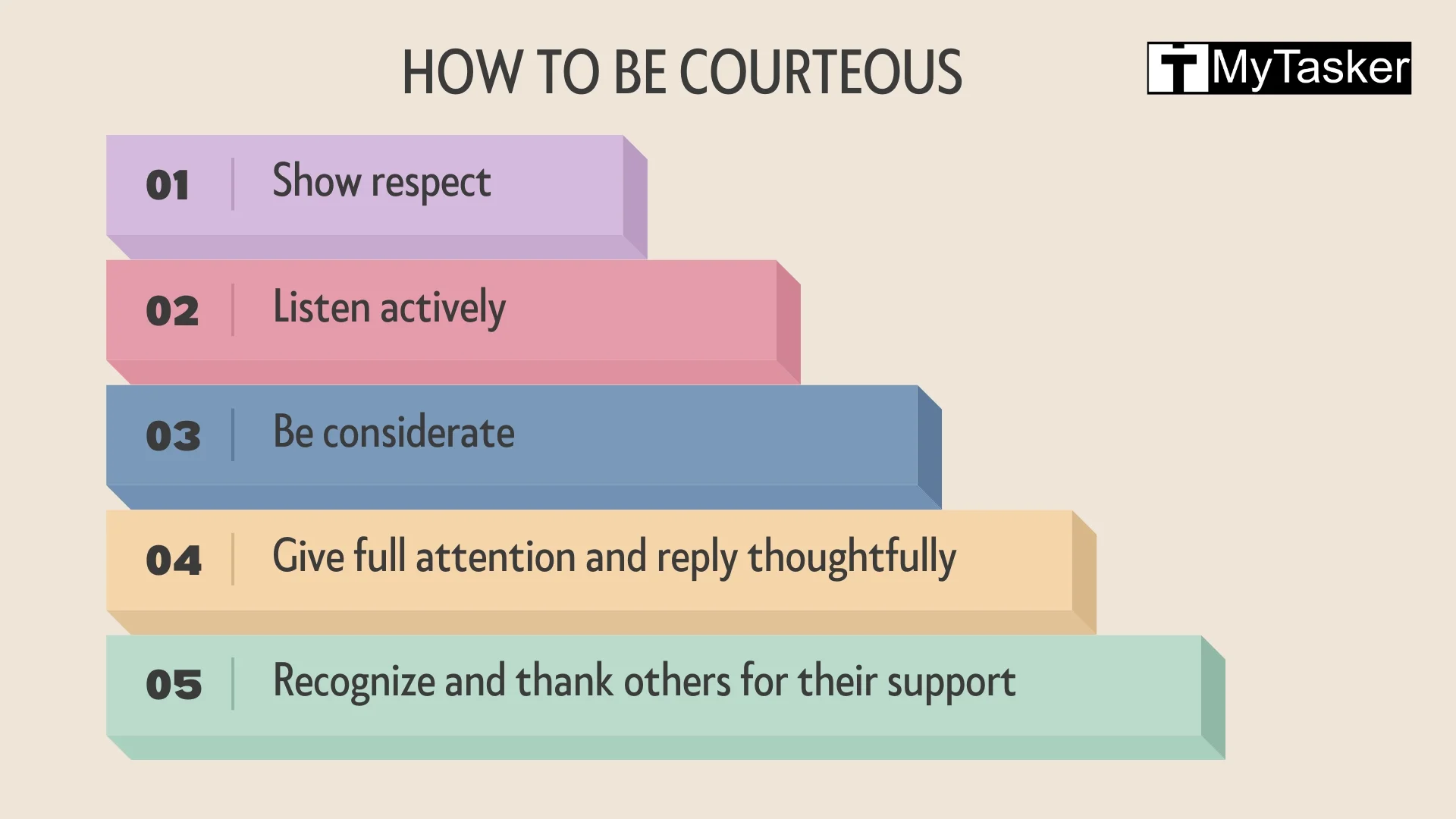
Courteous communication is about respect and tone. A courteous approach keeps dialogue open and acknowledges that other views exist. It is not about softening the message — it is about delivering it in a way that leaves the other person able to respond.
How to be courteous:
- Keep a friendly tone. Stay approachable, even in correction.
- Don't assume. Avoid making assumptions about what the other person did or didn't know.
- Put the recipient first. Focus on what matters to them.
- Respect other views. Acknowledge different opinions before disagreeing with them.
- Say thank you. Recognise the time and effort someone has given.
Good example: "Thanks for turning the report around so quickly. One thing to adjust before it goes out — the Q3 figures need updating to the revised numbers I've attached. Let me know if anything there isn't clear."
Why it works: It acknowledges the effort, states the correction plainly, and invites a question rather than closing the conversation.
Bad example: "This report is wrong. Redo it."
Why it fails: It gives no information about what is wrong and offers no route to fixing it. Worse, it teaches the recipient that raising questions is unwelcome — which multiplies errors on every task that follows.
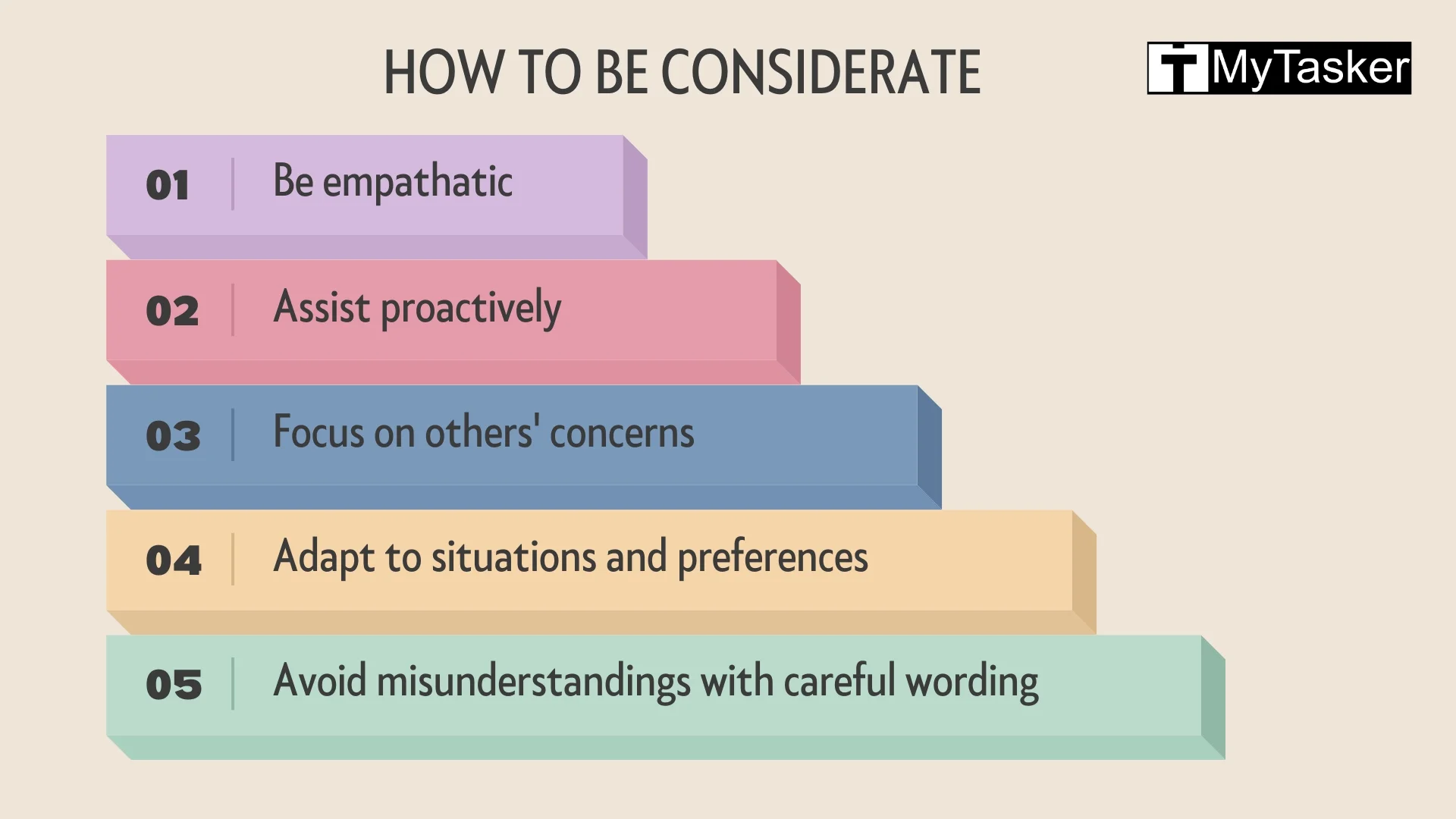
4. Consideration in communication
Considerate communication means being aware of your audience's needs, constraints, and feelings. Putting yourself in their position lets you write messages that land.
How to be considerate:
- Show real interest. Engage with their concerns, not just your own agenda.
- Empathise. Acknowledge the difficulty before asking someone to work through it.
- Use their language. Choose words that fit their background and role.
- Avoid harmful phrasing. Criticise the work, not the person.
- Focus on benefits. Explain how your message or solution helps them.
Good example: "I know some of you will find this new process demanding at first, so we've added extra training sessions, and the team is available for any questions along the way."
Why it works: It recognises the difficulty and offers support, so the change feels manageable rather than imposed.
Bad example: "This is the new process. Everyone is expected to be up to speed immediately, and I don't want to hear any issues."
Why it fails: It dismisses legitimate difficulty, which produces resentment and silent non-compliance rather than adoption.
5. Completeness in communication
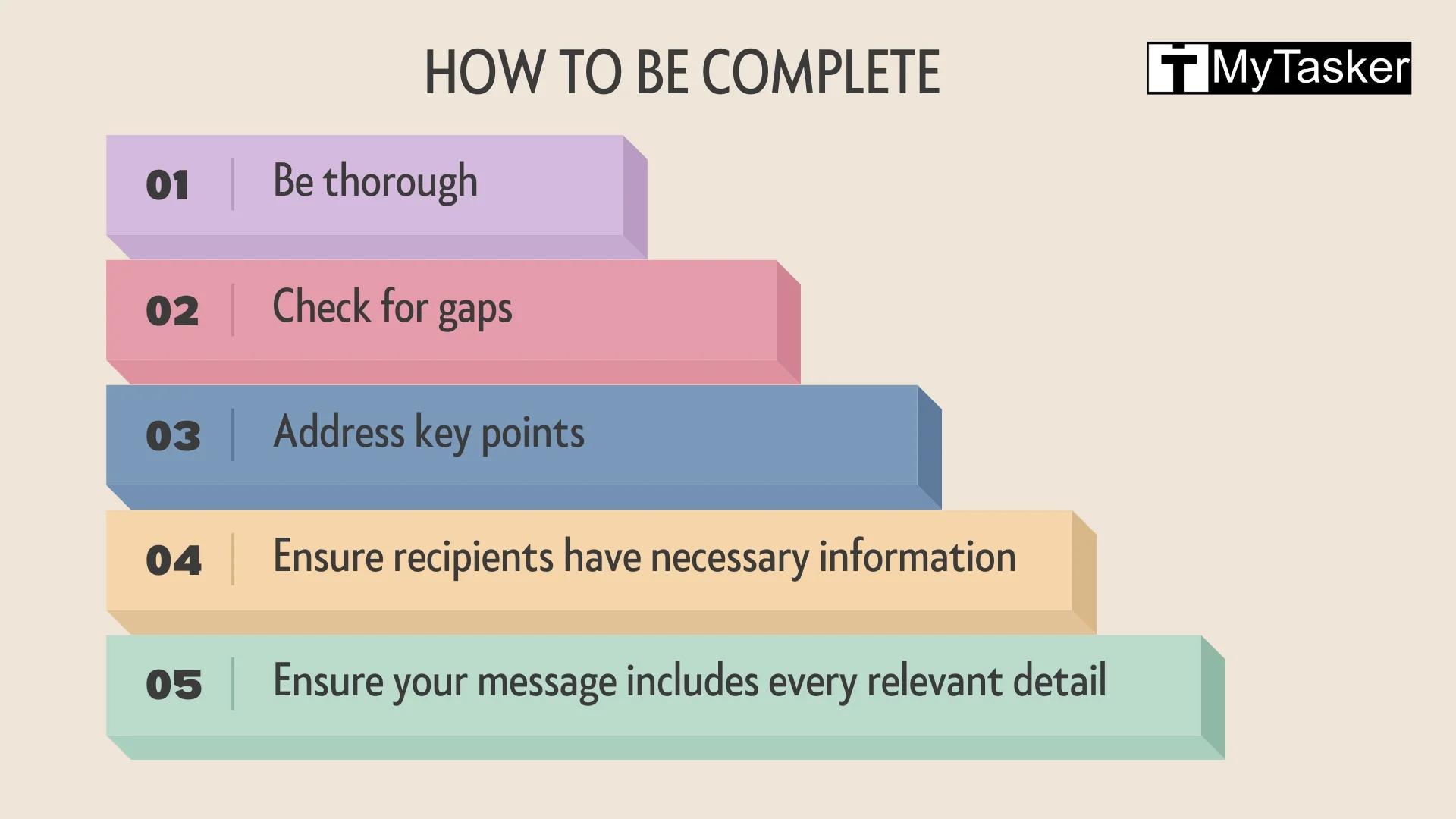
A complete message contains everything the reader needs to act: the information, the answers to the obvious questions, and the context behind the request. Thoroughness now prevents confusion later.
How to be complete:
- Answer the questions before they're asked. Anticipate what the reader will need.
- Build in a Q&A moment. After presentations, invite clarification rather than assuming everyone followed.
- Show the bigger picture. Help your audience see how the message relates to their own work.
Good example: "Finish the design by Friday, send the draft to the client on Monday, and share their feedback by Wednesday so we can start the build the following Friday."
Why it works: Every step has an owner, an action, and a date.
Bad example: "Once the design is done, send it to the client so we can get started."
Why it fails: No dates, no sequence, no definition of "done" — so the work drifts.
6. Concreteness in communication
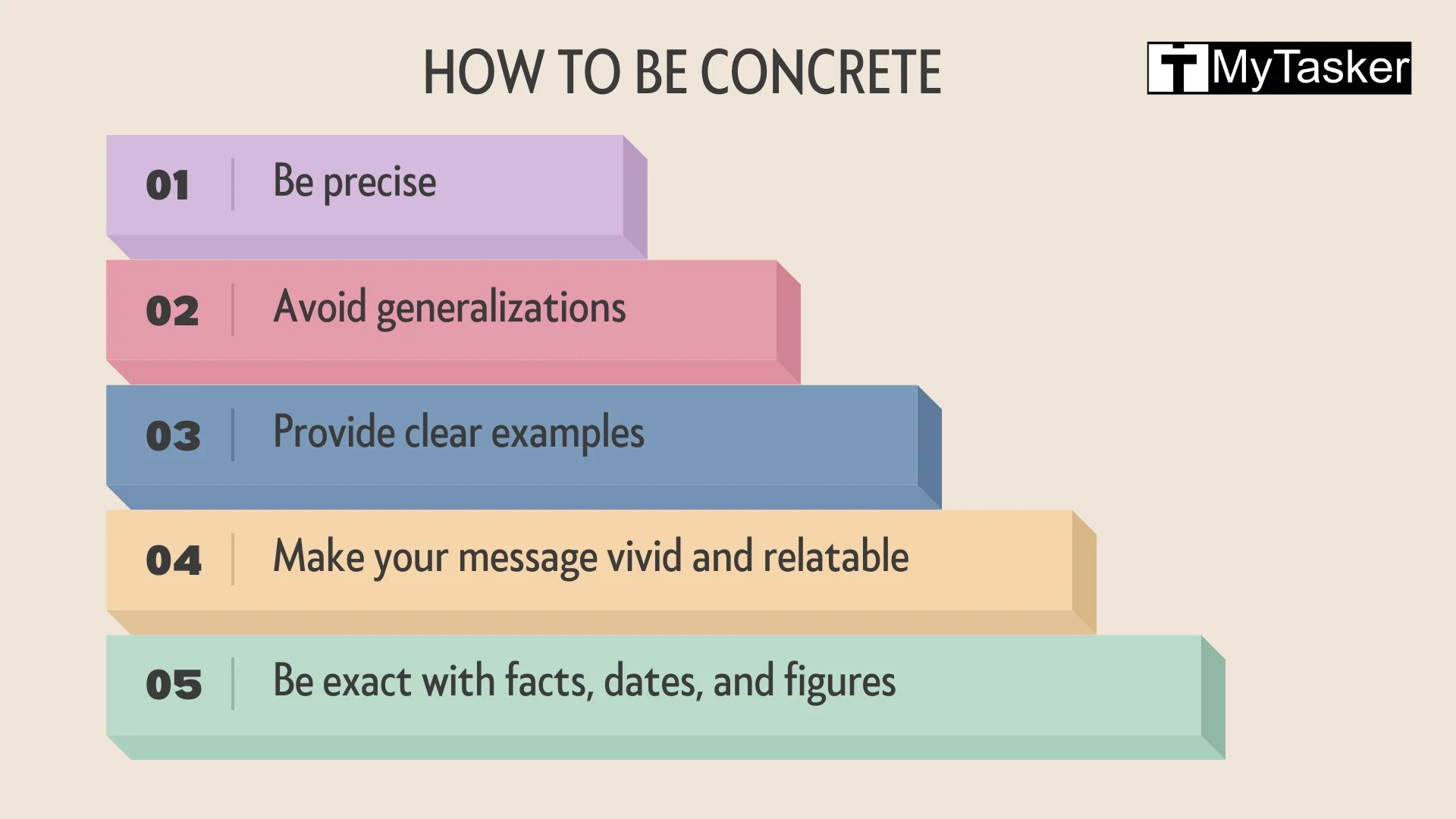
Concrete communication uses specific examples, facts, and data. Vague statements lose the reader; clear facts and real examples build trust.
How to be concrete:
- Back up claims with data. Use relevant figures to support your statements.
- Share real examples. Illustrate the point with something that actually happened.
- Avoid generalities. Replace "significant," "soon," and "better" with numbers and dates.
Good example: "Our ad campaign and improved customer service lifted sales by 20% last quarter, alongside a 5% gain in customer retention."
Why it works: The specific figures make the result easy to understand and easy to verify.
Bad example: "We had a good quarter with more sales and better customer loyalty."
Why it fails: There is nothing here anyone can act on, repeat, or learn from.
7. Correctness in communication
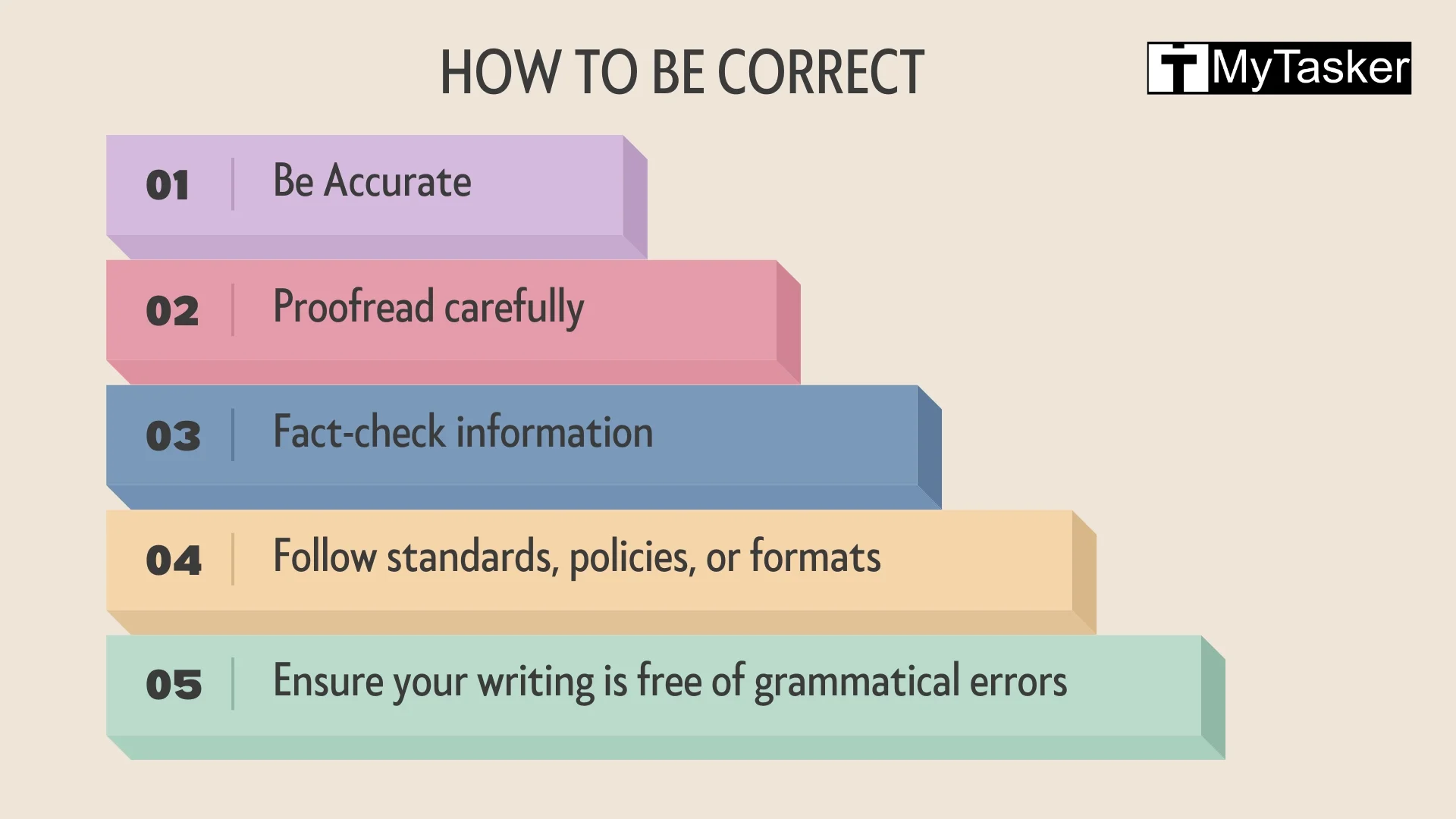
Correct communication means verified information, accurate language, and no errors. Accuracy is what makes the rest of your message worth reading.
How to be correct:
- Verify all information. Check facts and figures before they go out.
- Use the right words. Precision beats vocabulary.
- Check names and job titles. Get every identifier right.
- Get a second reader. Have someone knowledgeable review anything high-stakes.
- Use editing tools. Catch the grammar and spelling errors that undermine credibility.
Good example: "Our market share rose 5% over the last year, taking us to a 30% share."
Why it works: The figures are specific and verifiable, so decisions built on them hold up.
Bad example: "Our market share jumped 50% last year" — when the real figure is far lower.
Why it fails: Inaccurate information damages your credibility and leads to decisions made on a false basis.
The 7-C task brief
The fastest way to put the 7 Cs to work is to stop treating them as writing advice and start using them as a checklist for handing work to someone else. Seven lines, one per principle:
- Outcome — one sentence describing what should exist when this is done. (Clarity)
- Deadline with time zone — "Thursday 5 PM EST," never "end of week." (Correctness)
- Everything needed to start — files, logins, links, brand guidelines, attached now. (Completeness)
- Definition of done, plus one example of good — a past piece, a competitor's version, a screenshot. (Concreteness)
- What to do if blocked — who to ask, or permission to proceed on best judgement. (Consideration)
- Where this sits against their other work — one line, priority order. (Conciseness)
- Why it matters — one sentence of context, because people do better work when they know what it's for. (Courtesy)
The same request, briefed and unbriefed
The request that generates five follow-up emails:
"Hi — can you sort out the newsletter this week? Thanks!"
The same request, briefed:
"Please draft the September newsletter — the outcome is a ready-to-send draft in Mailchimp. Due Thursday 5 PM EST. The content brief and last month's issue are attached, and the Mailchimp login is in the shared vault. Match the tone of the August issue; that's our benchmark. If the product photos aren't in the Drive folder, go ahead without them and flag it. This is your first priority, ahead of the LinkedIn scheduling. It needs to go out before the trade show, so the date is fixed."
The second version takes ninety seconds longer to write. It removes roughly a day of round-trips.
Applying the 7 Cs across time zones
When there is a twelve-hour gap between a question and its answer, every unclear message costs a full working day. Three habits absorb most of that risk:
- One thread per task, so context never fragments across five conversations.
- An agreed response window, so nobody sits waiting on a reply that isn't coming until tomorrow.
- An end-of-day summary listing what's done, what's blocked, and what's next — which is simply Completeness applied to a status update.
At MyTasker, that summary is how our assistants are trained to close out a shift. The client should never have to ask where something stands.
Practical applications of the 7 Cs
- Clarity: Use plain language in emails and reports, and put the point in the first sentence.
- Conciseness: In presentations, stick to key messages. Bullet points do the work of paragraphs.
- Concreteness: Support arguments with numbers and examples. In sales pitches, use case studies and testimonials.
- Correctness: Check facts, proofread, and cite credible sources.
- Coherence: Structure your thinking. Headings and subheadings guide the reader through a written document.
- Courtesy: Be polite and show gratitude. Address the recipient by name and acknowledge their view.
- Completeness: In project updates, summarise progress, blockers, and next steps so stakeholders stay informed.
Used daily, these build understanding, stronger working relationships, and faster results.
Example of effective communication
Scenario: a team project update. Context: the team lead is briefing the team in a weekly meeting.
"Good morning, everyone, and thanks for coming. I want to update you on the XYZ project.
First, we completed phase one ahead of schedule — that's down to everyone's effort and coordination.
Where we are:
- Research phase: finished two weeks early
- Prototype development: completed last Friday
- Testing phase: begins Monday
- What I need from you: what do you think of the prototype, and are there any concerns before we move into testing?
Next steps: based on your feedback, we'll refine the prototype and prepare the client presentation. Please review the prototype materials before Thursday's meeting.
Thanks — your input on this has been genuinely useful."
What makes it work:
- Clarity: milestones are stated as facts with dates.
- Engagement: feedback is requested explicitly, not assumed.
- Structure: the update follows a predictable shape people can follow.
- Courtesy: contribution is acknowledged, which sets the tone for honest replies.
These principles are the backbone of our weekly huddles and inter-departmental meetings, and they carry into client work — including the articles and video scripts our writers produce.
Why is communication important?
Communication is the foundation of progress, culture, and society. It allows knowledge, skill, and tradition to pass from one generation to the next.
Building relationships, sharing information, and solving problems all depend on it. It shapes how we are perceived: we share our views, express ourselves, and connect with others through words, in professional and personal life alike.
Without effective communication, you get misunderstandings, weak teamwork, and stalled decisions. With it, teams learn, adapt, and grow.
How do you improve your corporate communication skills?
- Know your audience. Shape the message around their needs and their level of context.
- Be clear and direct. Keep it simple, and drop the jargon when you're talking outside your own domain.
- Listen actively. Quiet the urge to formulate your reply while the other person is still speaking.
- Show empathy. Understand other views before responding to them.
- Match tone to message. Your delivery should support what you're saying, not contradict it.
Then keep going. Remove clutter from your writing, and treat communication as a skill you practise rather than one you have.
How do you succeed in corporate communication?
- Know your audience and shape the message to their needs.
- Prioritise clarity over everything else.
- Choose the right channel — email, meeting, chat, or call.
- Be reliable, open, and accessible.
- Set SMART goals (Specific, Measurable, Achievable, Relevant, Time-bound) so you can track whether communication is actually improving.
- Manage emotion and cultural context deliberately, especially across international teams.
- Ask peers for feedback, and act on it.
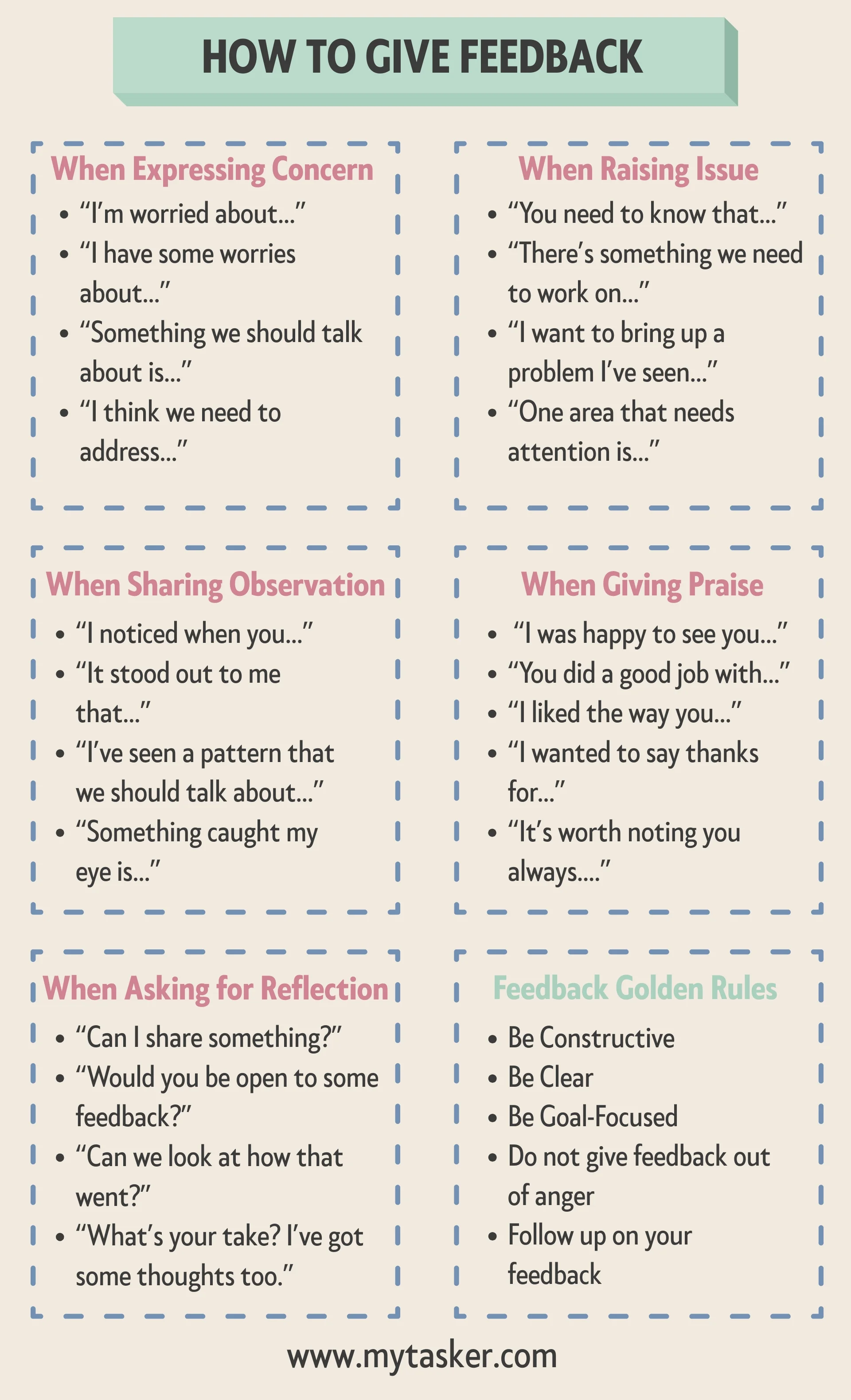
How to give feedback
Start by stating the purpose. Briefly explain what you want to discuss and why it matters. If you are opening the conversation, let the person know feedback is coming and be specific about the topic — this removes the anxiety of not knowing where a conversation is heading.
If they asked for the feedback, anchor your response to the question they raised.
Feedback should always be constructive, clear, and goal-focused. Whether you are asking for a change or reinforcing good work, the wording is what determines whether the conversation continues or closes.
This matters most with remote teams. In an office, a blunt correction gets softened by tone and body language. In writing, it arrives bare — which is why Courtesy stops being a nicety and becomes an operational requirement.
Who created the 7 Cs?
The 7 Cs have been interpreted differently across education and communication studies. Bernie Trilling and Charles Fadel proposed the 4 Cs — critical thinking, collaboration, communication, and creativity — in 21st Century Skills: Learning for Life in Our Times, later adding cross-cultural understanding, computer and ICT literacy, and career self-reliance.
In communication specifically, Scott M. Cutlip and Allen H. Center introduced the 7 Cs in Effective Public Relations (1952):
- Clear
- Concise
- Concrete
- Complete
- Correct
- Coherent
- Courteous
The principles apply across every field of communication. They keep messages focused and reduce misinterpretation.
Frequently asked questions
How do you apply the 7 Cs when delegating to a virtual assistant?
Write the brief so it can be acted on without a follow-up question. State the outcome clearly, give an exact deadline with time zone, attach every file and login needed, define what finished looks like with an example, say what to do if blocked, set the priority against their other work, and explain why it matters.
What is the most common communication mistake when working with a remote assistant? Assuming shared context. Your assistant cannot see your calendar, your past conversations, or the tab you have open. Anything left implied gets guessed at — and a good guess still costs a revision round.
Why does a vague task brief cost more time than a detailed one? It moves the clarification cost downstream. Ninety seconds saved when writing the request comes back as several rounds of questions, and across time zones each round can cost a full working day.
How do I remember the 7 Cs? Practise them one at a time rather than all at once. Start with Clarity and Conciseness on every email you write this week, then layer in the rest. Repetition turns the checklist into instinct.
Do the 7 Cs apply to voice notes and calls as well as writing? Yes, and Completeness matters more, not less. Spoken instructions leave no record, so anything given verbally should be followed by a written summary the other person can work from.
Is there an eighth C? Coherence is often added, covering logical flow and connected ideas. Some versions use Cohesion for the same purpose. Cutlip and Center's original 1952 list included Coherent in place of Consideration.
Summary
Clear communication isn't a soft skill when you are delegating — it is the delivery mechanism. The 7 Cs turn an intention in your head into work that someone else can complete without you standing behind them.
If briefing, chasing, and correcting is taking longer than doing the task yourself, the problem is usually the brief, not the person.
MyTasker's virtual assistants are trained on this standard from day one: structured task briefs, agreed response windows, and end-of-day summaries. If the work you need handled is writing, our content and editing team applies the same principles to every email, blog post, and campaign they produce.